 Base
Base Unichain
 Robinhood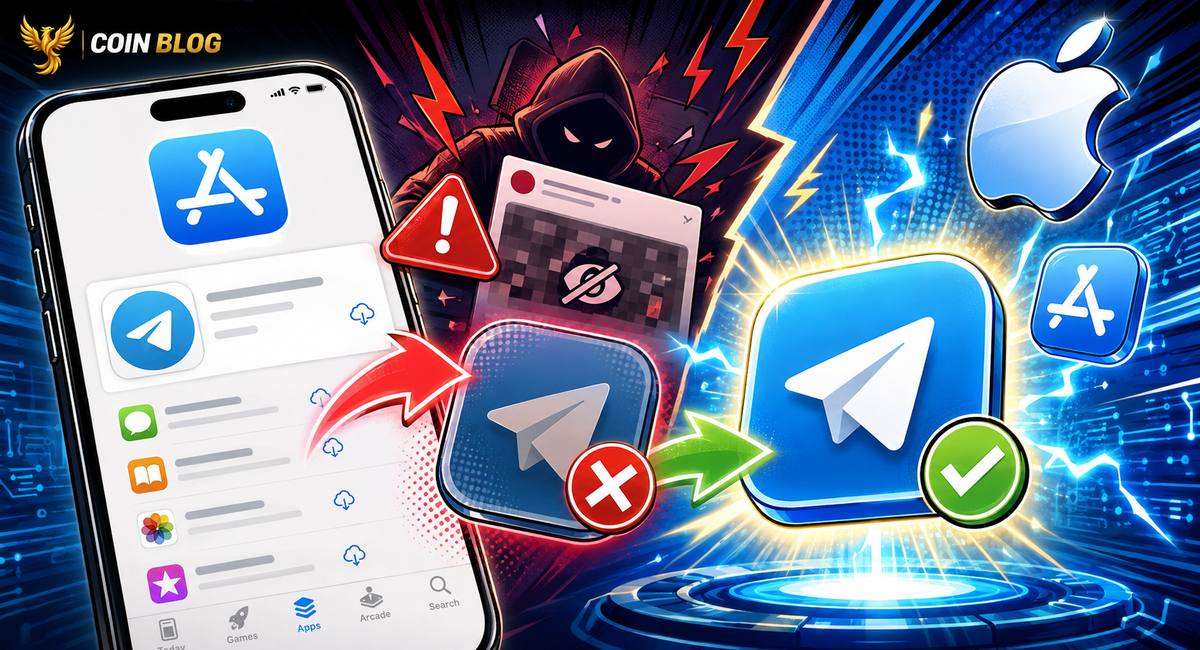
Apple temporarily removed Telegram from the App Store after receiving a report involving child sexual abuse material. Telegram removed the content, banned the user and returned to the store on the same day. Pavel Durov later said an attacker had edited an old message as part of an extortion scheme designed to trigger a takedown. Gram, a token associated with the ecosystem, fell and then recovered. Telegram responded with the brief line, “Reports of my demise are greatly exaggerated.”
The event shows that application distribution remains centralized even when payments or tokens operate on blockchains. One store can interrupt new installations for a global audience, and markets quickly transfer platform risk into the price of a related asset.
This should not be reduced to a simple censorship argument. Apple has a duty to respond to this category of material, and Telegram has a duty to moderate its service. The harder question is procedural: how should a platform distinguish a systemic violation from an attack in which someone intentionally plants evidence to cause removal? If an automated report can disable a major application without prior contact, extortionists gain a powerful new tool.
The second-order effect reaches every user-generated platform with a crypto economy. They need moderators, but also verifiable incident logs, emergency communication channels with app stores and a way to reach users outside the application itself. Watch for changes to Apple's review process, Telegram's technical explanation and copycat attempts against other services. This removal lasted only hours, yet it exposed a distribution dependency that no blockchain can decentralize on its own.