 Base
Base Unichain
 Robinhood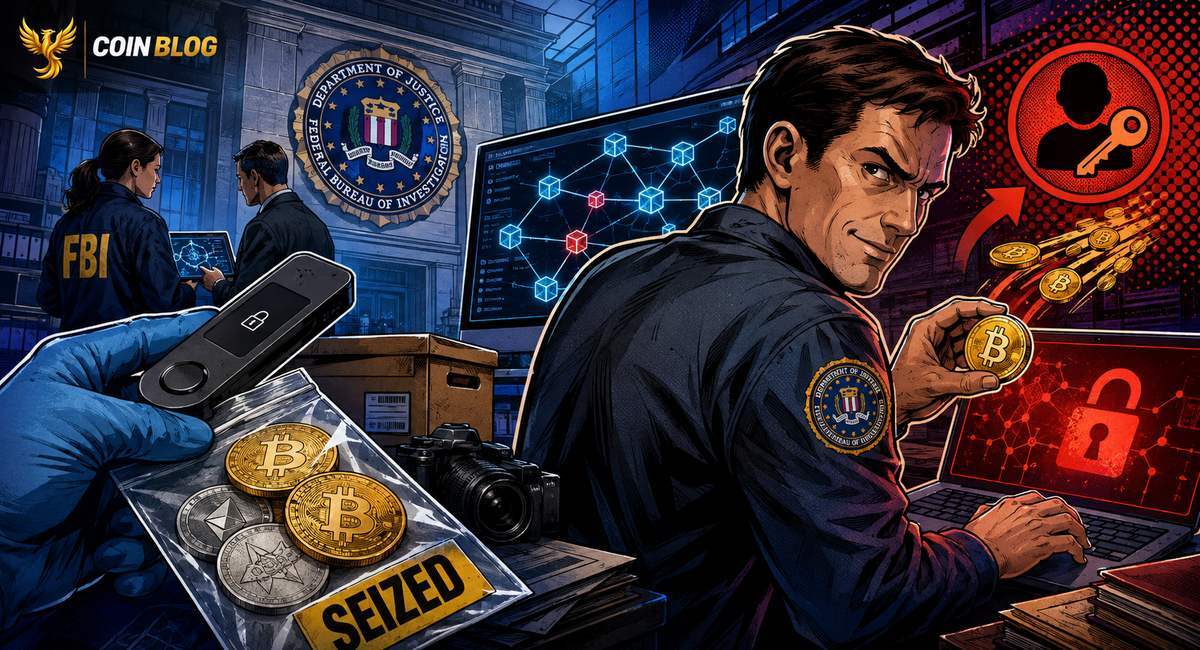
Former FBI supervisory agent Patrick Steven Yaroch admitted using internal systems to obtain credentials for cryptocurrency wallets linked to an adversarial country and transferring assets to addresses he controlled. Court records describe ten unauthorized transfers worth about $1 million. Some funds were placed in the Suilend protocol to earn yield. After he reported himself, investigators recovered devices, seed phrases and a Trezor wallet, and moved roughly $925,000 back to government-controlled addresses.
The central issue is not the unusual DeFi route or his ChatGPT query about how to use a million dollars. It is the access model. An employee was able to extract value from wallets connected to his official work, and existing controls did not automatically prevent the transfers.
Crypto intensifies a familiar insider threat. A bank payment usually passes through role separation, logs and infrastructure that can sometimes reverse or freeze a transaction. A seed phrase or private key can give one person immediate control over the asset. Government agencies therefore need more than a hardware wallet in a secure room. They need multisignature authorization, independent approval, transfer limits, address monitoring and a rule preventing one employee from both obtaining credentials and initiating movement.
The second-order risk concerns trust in digital-asset seizures. If law enforcement cannot demonstrate a strict chain of custody, defense lawyers in other cases may challenge the integrity of both the assets and the evidence. Watch the sentence, the final recovery amount and whether the FBI changes its procedures for seized wallets. This case is a reminder that blockchain transparency can help trace movement, but it cannot compensate for weak governance before a transaction is signed.