 Base
Base Unichain
 Robinhood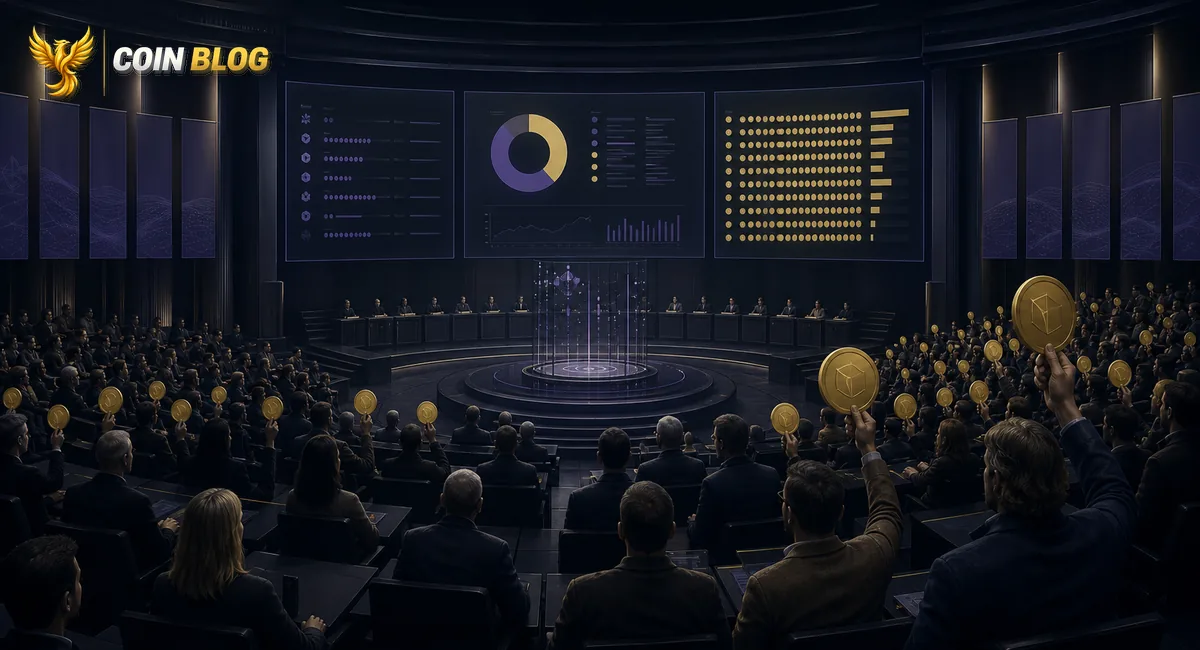
The word DAO carries a quiet promise. A decentralized autonomous organization is supposed to be a group of strangers coordinating without bosses, making decisions together, sharing ownership, and running an enterprise through transparent code rather than a hierarchy. It is one of the most romantic ideas crypto ever produced, and it taps into something people genuinely want: a fairer way to build and govern things collectively. But if you spend real time watching how DAOs actually operate, a less flattering picture emerges. Most of them are not democracies. They are shareholder plutocracies wearing the language of democracy, and understanding why is essential to understanding both their limits and their real potential.
The confusion starts with the word itself. People hear democracy and imagine one person, one vote. Almost no DAO works that way. In the overwhelming majority of them, voting power is proportional to how many tokens you hold. That is not the logic of a democracy; it is the logic of a corporation, where influence follows ownership. This is not necessarily wrong, but it is different, and pretending otherwise leads to disappointment and, sometimes, to people getting hurt when they mistake a governance token for a citizenship they do not actually have.
Token voting is ownership, not citizenship
Once you see a DAO as a company rather than a country, its behavior makes far more sense. When votes are weighted by tokens, whoever holds the most tokens holds the most power, and in practice that usually means early investors, founders, and large funds. A handful of big holders, often called whales, can frequently decide an outcome before smaller participants even notice a proposal exists. The result is a system that looks open because anyone can vote, but is concentrated because votes are not equal.
This concentration is easy to hide during calm periods and impossible to hide during contested ones. When a proposal genuinely threatens the interests of large holders, the vote tends to break along the lines of ownership, not ideals. That is exactly how a corporation is supposed to work, with shareholders protecting their stake. The problem is only that DAOs market themselves using the vocabulary of grassroots democracy while operating on the mechanics of concentrated ownership. The honest framing is that a governance token is a share, and a governance vote is a shareholder vote. Seen that way, the outcomes stop being a betrayal of the ideal and start being the predictable behavior of the actual system.
The painful reality of voter apathy
Even the plutocratic version of DAO governance runs into a second, more human problem: most people do not vote. Turnout in DAO governance is often strikingly low, with the vast majority of token holders never participating in a single decision. People buy a token for exposure to a project, not to spend their evenings reading governance forums and evaluating technical proposals. Governance is work, and most holders quietly decline to do it.
This apathy has a compounding effect that pushes power even further toward the few. When most holders abstain, the small group that does show up gains outsized influence, and the already-large holders find their control effectively magnified. To cope, many DAOs adopt delegation, where holders hand their voting power to representatives who are willing to do the work. Delegation is a sensible response, and it keeps governance functioning, but notice what it quietly recreates: a representative class that governs on behalf of a mostly passive majority. That is not the flat, leaderless utopia the word DAO first suggested. It is, once again, something closer to a familiar institution with elected stewards, only with far less accountability than a real political system would demand.
The tooling got good even as the theory got complicated
It would be unfair to describe DAOs only through their disappointments, because the infrastructure around them has matured impressively. The practical machinery of collective decision-making now works far better than it did in the early, chaotic days. Off-chain signaling platforms like Snapshot let communities gauge sentiment and vote without paying transaction fees for every ballot, which removed a real barrier to participation. On-chain governance frameworks let a passed proposal actually move funds or upgrade a protocol automatically, closing the gap between deciding and doing.
Mature governance communities such as the one around Uniswap have built genuine processes: structured discussion, temperature checks before formal votes, delegate systems, and public debate that happens in the open where anyone can read it. This is real, and it matters. The transparency of DAO governance is often genuinely superior to the closed-door decision-making of traditional companies, where shareholders learn about major choices only after they are made. So the tooling did not fail. What happened is subtler: the tools work, but they cannot by themselves manufacture broad, informed, engaged participation, and they cannot turn ownership-weighted voting into equality. Good plumbing does not change the shape of the water.
What DAOs are actually good for
The useful conclusion is not that DAOs are a fraud, but that they are being judged against the wrong ideal. Measured against the fantasy of pure, egalitarian, leaderless democracy, almost every DAO fails. Measured against what they can realistically be, some are genuinely valuable. A DAO is an excellent tool for transparent, rule-bound, collective ownership of a shared resource, especially a treasury or a protocol, where the rules are visible, the funds move only when the process says so, and no single insider can quietly loot the pool.
The DAOs that succeed tend to be the ones that stop pretending. They accept that they are more like member-owned cooperatives or transparent corporations than digital nation-states. They design for the reality of concentrated ownership and low participation instead of denying it, building in protections for minorities, clear mandates for delegates, and limits on what any majority can do. The future of DAOs is probably not the dissolution of all hierarchy, which was always more slogan than plan. It is a genuinely better version of collective ownership: more transparent, more programmable, and more open to entry than the institutions that came before, even if it never becomes the perfect democracy the name once promised. Calling it what it is would not diminish the achievement. It would let people trust it for the right reasons.