 Base
Base Unichain
 Robinhood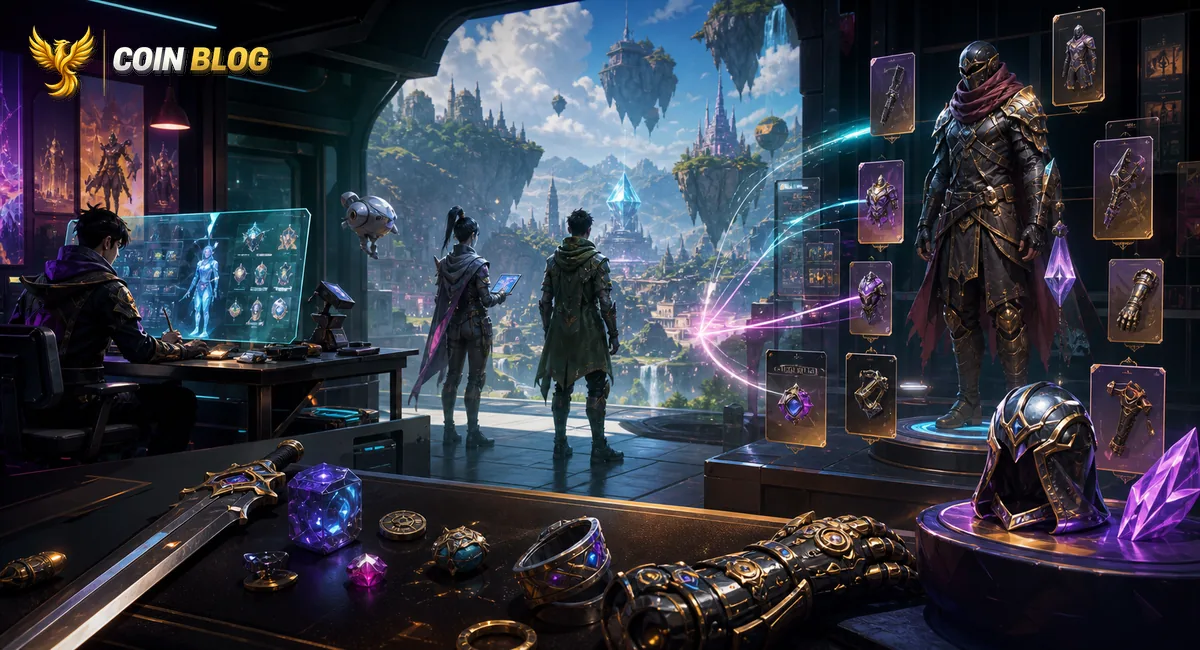
For a brief, feverish moment, play-to-earn looked like it would rewrite the rules of gaming. The pitch was intoxicating: instead of pouring hours into a game and getting nothing but fun, players could own their in-game items as tokens, trade them freely, and even earn a real income by playing. In some parts of the world, people genuinely paid their bills this way for a while. Then, almost as fast as it rose, the model collapsed. Understanding why it failed, and what survives the wreckage, is the key to seeing what blockchain gaming can actually become once the hype has drained away.
The core mistake was hiding in the name itself. Play-to-earn put earning first and playing second, and that ordering doomed it. A game is supposed to be worth playing because it is fun. When the primary reason to show up is to extract money, you no longer have a game; you have a job that happens to have graphics, or worse, an investment scheme dressed as entertainment. That distinction is not academic. It determines whether an economy can survive.
Why the first wave was really a financial pyramid
The economics of most early play-to-earn games were unsustainable in a way that was obvious in hindsight. The rewards paid to existing players did not come from a genuine, self-sustaining source of value. They came, overwhelmingly, from the money brought in by new players buying tokens and assets to get started. That is the exact shape of a pyramid: early participants are paid by later participants, and the whole structure depends on an endless supply of newcomers.
As long as the player base was growing quickly, everything looked wonderful. Token prices rose, earnings were real, and the story seemed proven. But no game grows forever. The moment new-player growth slowed, there was not enough fresh money entering the system to pay the rewards everyone expected. Token prices fell, which reduced earnings, which drove away the players who had come only for income, which reduced the inflow further. The same downward spiral hit almost every game built on this model. The lesson is blunt: an in-game economy cannot pay out more value than it genuinely creates, and paying people to play is not the same as creating value.
True ownership is the idea worth keeping
It would be a mistake to conclude that the whole experiment was worthless, because underneath the failed economics sat a genuinely good idea: real digital ownership. In traditional games, everything you accumulate, every skin, weapon, character, and hour of progress, legally belongs to the game company. If they shut the servers down, ban your account, or simply lose interest in the game, your items evaporate. You never owned them; you rented them without realizing it.
Blockchain changes that relationship. When an in-game item exists as a token on a public chain, the item can persist independently of any single company's servers or goodwill. The token standard that made this concrete, ERC-721, gave every unique digital object a verifiable owner and a history that no company can silently rewrite. Newer standards push the idea further, letting a game asset itself own other assets, so that a character can hold its own inventory as documented in ERC-6551. This is a real shift in the balance of power between players and developers, and it does not depend on any token going up in price to be valuable. Ownership is worth something even in a game with no speculation at all.
The hard part is making ownership matter to fun
The challenge for the next generation of blockchain games is that ownership, by itself, does not make a game good. Players do not fall in love with a game because their sword is technically an on-chain asset; they fall in love because the sword feels powerful, the world is compelling, and the moment-to-moment experience is a joy. Blockchain ownership is a feature that can deepen a great game, but it can never rescue a boring one. The failed play-to-earn wave got this exactly backwards, treating the financial layer as the product and the gameplay as an afterthought.
The more promising path reverses the priorities. Build a game people would happily play even if there were no tokens involved, and then use ownership to make that experience richer: letting players truly own the rare item they earned, carry their identity across titles, or sell something they no longer want to another player rather than losing it. In this framing the token is invisible plumbing, not the point. A player might enjoy a game for months without ever thinking about the blockchain underneath, and only appreciate it the day they decide to sell an item or move it somewhere the developer never anticipated. That is ownership serving fun, rather than fun being sacrificed to speculation.
What the next wave has to prove
The first era of Web3 gaming proved a negative and hinted at a positive. It proved, conclusively, that you cannot build a lasting game on an economy that only works while it is growing, and that putting earning ahead of enjoyment produces something that is neither a good investment nor a good game. But it also hinted that verifiable digital ownership is a genuinely new capability, one that traditional gaming simply cannot offer, and that some players clearly value.
The games that matter from here will be the ones that internalize both lessons at once. They will be fun first, designed by people who care about play rather than tokenomics, and they will use ownership quietly and honestly to give players more control over the things they earn and buy. The speculative frenzy is over, and that is healthy, because it clears the field for builders who want to make good games that happen to give players real ownership, instead of financial schemes that happen to have a game attached. Play-to-earn is dead. Play that you happen to own is the far more interesting thing that comes next.