 Base
Base Unichain
 Robinhood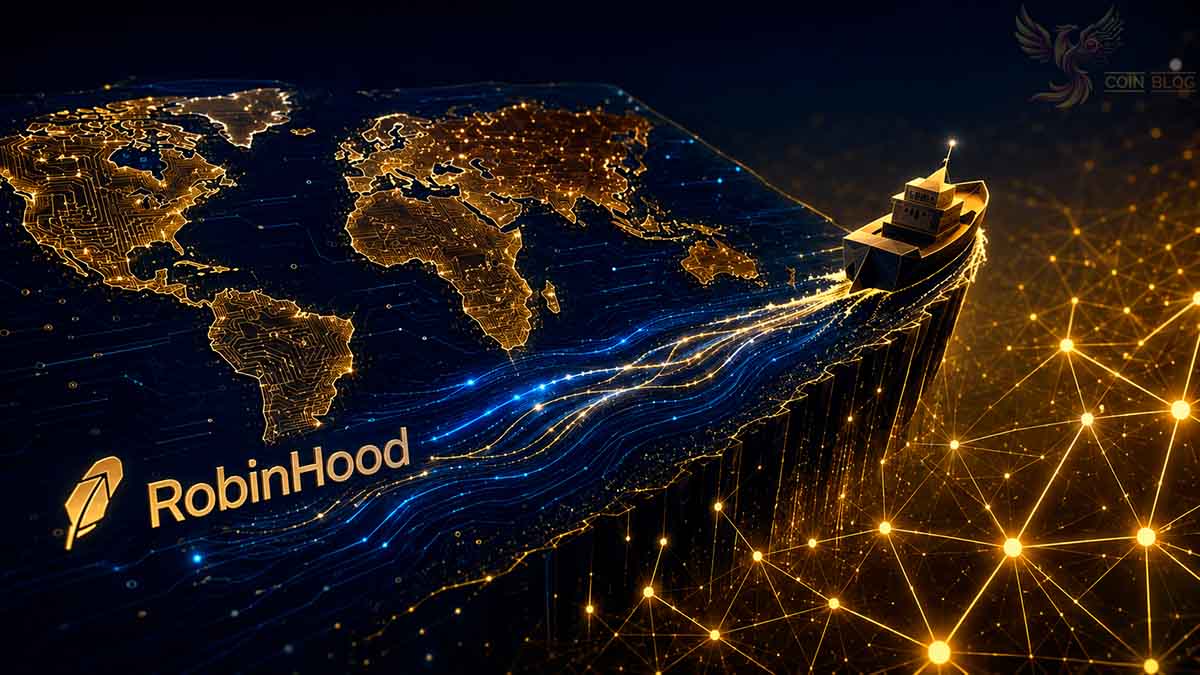
Robinhood spent July 1 on a stage inside the Old Royal Naval College in London, framing its keynote around a joke about flat earth theory. Underneath the theatrics, the company did something less flashy and more consequential than the "new era of crypto" tagline suggests. It shipped its own blockchain , put its own token catalog on top of it, and quietly moved a set of risks that used to sit with outside partners onto its own books.
That distinction matters more than any single feature on the list.
A chain changes who holds the leash
For years, Robinhood behaved like a distribution company. It routed crypto trades to liquidity venues it didn't control, ran early tokenized stock pilots on infrastructure it didn't own, and depended on other chains for settlement. Robinhood Chain flips that relationship. It's an Arbitrum Orbit-based Layer 2 that Robinhood operates itself, hosting Stock Tokens tied to names like NVIDIA, Alphabet and Apple, priced and moved cross-chain through Chainlink's oracle network and CCIP infrastructure from day one.
Owning the chain means Robinhood now controls transaction sequencing, fee capture, and the pace at which new products ship. It no longer needs to negotiate terms with an external venue to launch a new asset class. That's a genuine shift in bargaining power, not just against Coinbase, but against Arbitrum itself. Robinhood is now a chain operator sitting on top of Arbitrum's technology stack, not a guest app inside someone else's ecosystem.
Most of the coverage around the event treats this as a feature announcement: a new chain, a new token catalog, a lending product, agentic trading. Reading Robinhood's own release next to Chainlink's confirms the technical claims line up. What's harder to find in the coverage is why a brokerage would want to become an infrastructure operator in the first place, and what it gives up by doing so.
The bet behind the bet
The obvious answer is margin and control. A broker earns spread and subscription fees. A chain operator earns from every transaction that touches its rails, plus first-mover control over which apps, liquidity providers and lenders get access on favorable terms. Uniswap deploying a dedicated AMM and Morpho powering Robinhood Earn aren't neutral integrations, they're placements Robinhood chose, on a chain Robinhood built, for a user base Robinhood already owns. That's a fundamentally stronger position than being one broker among many routing orders to a shared, neutral venue.
The less obvious cost is that Robinhood now owns operational risk it used to be able to outsource. If a third-party exchange or blockchain has an outage, that's someone else's headline. If Robinhood Chain has an outage, or the oracle powering every priced asset on it misbehaves, that's Robinhood's headline, and it hits every product built on top simultaneously, from Stock Tokens to lending to agentic trading.
What the feature list quietly skips over
Two things get lost in most of the coverage, and neither is a minor footnote.
First, Stock Tokens are not shares. Robinhood's own Key Information Document for the EU product describes them as derivative contracts between the user and Robinhood Europe, priced off the underlying security without granting ownership rights. The same document states investors can lose their full stake due to market conditions "or the insolvency of Robinhood." That's a meaningfully different risk profile than holding a share of NVIDIA through a regulated custody account, and it's rarely stated with that clarity in coverage that leads with "millions of users can now access tokenized Apple stock."
Second, pricing an entire catalog of tokenized real-world assets through a single oracle provider is efficient engineering and a concentrated point of trust at the same time. Chainlink's Data Feeds, Data Streams and CCIP now determine the price and cross-chain movement of every Stock Token on Robinhood Chain. That's not a criticism of Chainlink's track record, it's a structural observation: a mispriced feed or an exploited bridge wouldn't corrupt one app, it would corrupt price discovery for the entire asset catalog at once, for a user base that skews far more retail and far less crypto-native than a typical DeFi protocol's users. DeFi Prime, one of the few outlets covering this critically, flagged that mainnet adoption numbers were unverified on-chain and only hours old at the time most other outlets were already declaring the launch a success. That gap between confirmed architecture and confirmed traction is worth sitting with before repeating the headline numbers.
Who actually gains from this
Chainlink gains a default position on a consumer-facing chain with tens of millions of potential users, a credibility upgrade that goes beyond another integration logo. Arbitrum gains a flagship, brand-recognizable Layer 2 running on its Orbit framework, plus the transaction and sequencer economics that come with it. Uniswap and Morpho gain a captive, day-one liquidity and lending funnel without having to win users away from anywhere. Robinhood shareholders got an immediate answer too, with the stock reacting positively in the days following the announcement. International users in Canada, freshly onboarded through the WonderFi acquisition, and in Singapore, where Robinhood now holds a capital markets services license, get access to products that US regulatory structure still doesn't allow domestically.
Who is carrying the exposure
Retail buyers who treat "Stock Token" as interchangeable with "owning the stock" are carrying counterparty risk against Robinhood Europe that a regulated brokerage account wouldn't expose them to. EU regulators are not a hypothetical concern here, the Bank of Lithuania has already sought clarification on whether Robinhood's existing stock token structure satisfies MiFID II, and an expanded token catalog gives that scrutiny more surface area, not less. Agentic trading carries its own quiet risk transfer: Robinhood's own account materials state that users are responsible for reviewing account activity and assume all risk for trades executed by AI agents. That's a meaningful liability shift dressed up as a convenience feature, and it will matter the first time an agent executes a trade nobody intended.
What actually tells you if this worked
Robinhood's second-quarter earnings call on July 29 is the first real checkpoint, since it's the first moment onchain volume and usage data will be reported by Robinhood itself rather than estimated from a day-old block explorer. Watch whether EU regulators respond to the expanded Stock Token catalog with anything beyond the existing Lithuania inquiry. Watch whether the promised UK crypto trading launch actually lands on a specific date, since "coming soon" announcements at these events have slipped before. And watch whether any competitor, rather than partnering with an existing chain the way most brokerages have, decides to build and operate its own, which would suggest Robinhood's move is read industry-wide as a template rather than a one-off.
The headline from July 1 is that Robinhood launched a blockchain. The more useful read is that Robinhood decided owning the entire stack, chain, oracle dependency, custody and liability terms, is worth more to its long-term positioning than being the best interface on top of someone else's. That's a rational bet for the company. It is also a bet that quietly asks its users to hold more of the risk than the keynote implied.