
 Base
Base Unichain
 Robinhood
Ledger in 2026: what's actually changed, and why it matters if you're still keeping crypto on an exchange
In April 2026, roughly $600 million was drained from Kelp DAO and Drift Protocol over the span of a few weeks - a textbook reminder that money sitting on a protocol or an exchange is legally "yours" only until someone else gets to it first. Add that up across the year so far and the total losses cross a billion dollars. Against that backdrop, talking about cold wallets stops being a topic for the paranoid - it's basic hygiene at this point.
Ledger is the most recognizable name in this space, and enough has changed over the past year to sort out what's actual substance versus what's just marketing.
Ledger devices are now "signers," not "wallets" - and it's not rebranding for its own sake
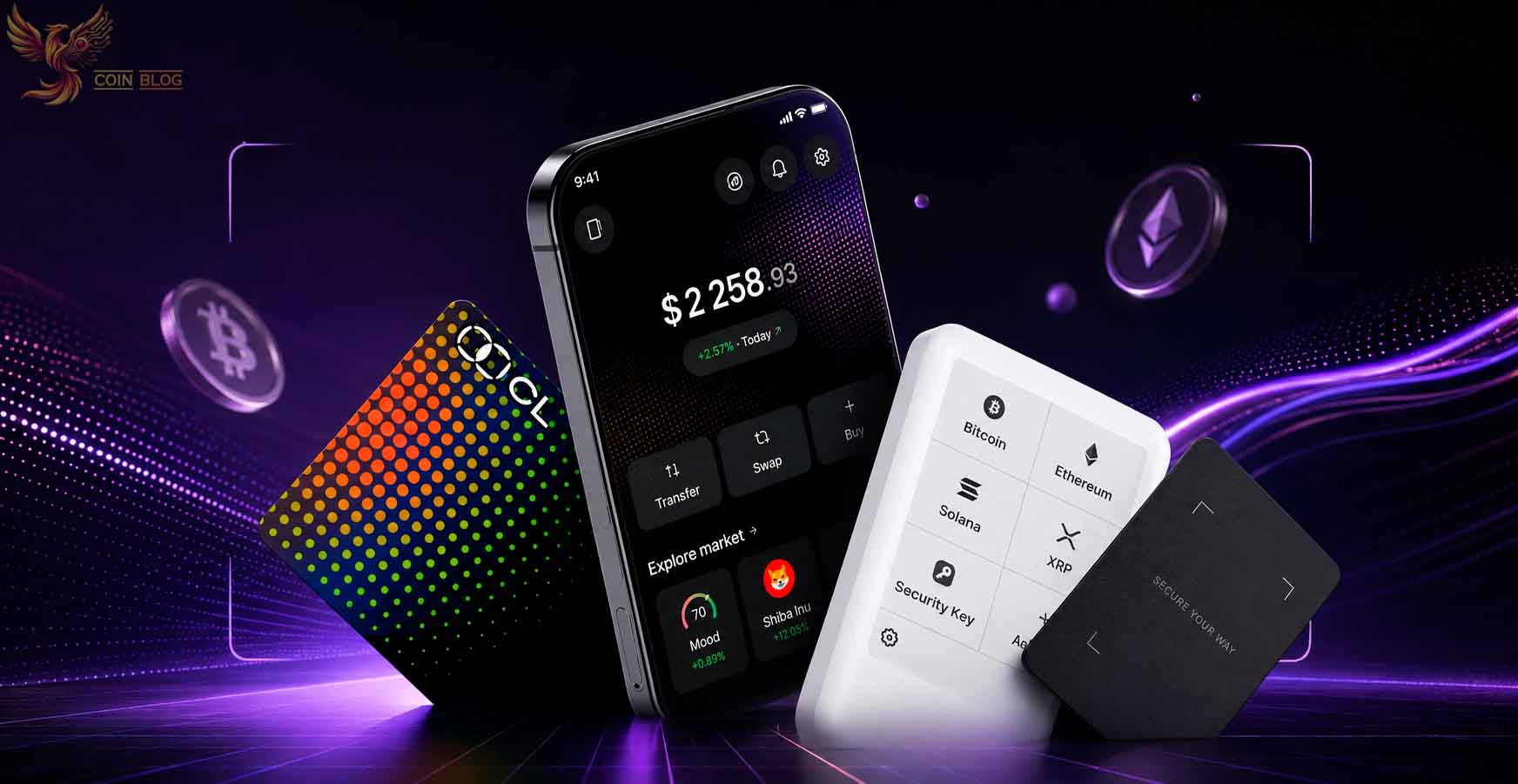
With the launch of the Ledger Nano Gen5, the company officially changed its terminology: devices are no longer called wallets, but signers. On paper it's a small wording change; in practice, it's a more accurate description of what the device actually does - it doesn't store your crypto (that lives on the blockchain), it physically confirms that a transaction was authorized by you, not by a script, a piece of malware, or someone who got into your phone. Given how many current attacks work by swapping the recipient address in your clipboard or through phishing dApps, that distinction isn't just semantics.
The app got a new name too: Ledger Live is now Ledger Wallet™. Version 4.0 launched in April under the tagline "Trade Different," and since then the company has been shipping updates roughly every two weeks - 4.2, 4.4, 4.6, and as of this writing, 4.8.0 (released June 11). The most notable functional addition is native MoonPay Trade integration: cross-chain swaps directly inside the app, with no tab-hopping and no need to hand your keys to yet another third-party service. It's a small thing, but small things like this are exactly what determines whether someone actually uses a cold wallet day to day, or whether it ends up in a drawer after a one-time transfer.
Nano Gen5 - the new entry point into the ecosystem, $179
The Ledger Nano Gen5 launched in October 2025, and in 2026 it picked up limited-edition colorways (Matcha Green, Glacier White, Cherry Red) - a mostly cosmetic detail, but one that signals this is a line being actively developed, not a one-off experiment. Ledger is positioning it as more than "a device for crypto": their messaging points toward broader digital identity use cases - signing not just transactions but smart contracts, and potentially identity verification down the line. The "Proof of You" phrasing in their materials is a bit much, but the direction makes sense: the more online actions require proof that a human - not a bot or a compromised account - actually did them, the more a separate physical device for that purpose starts to matter.
An unexpected but logical pivot - protection from your own AI agents
In April, Ledger announced its 2026 AI Security Roadmap - essentially a hardware "root of trust" for situations where blockchain actions are handled not directly by a person, but by an AI agent with delegated permissions. It sounds like a solution to a problem that barely existed a year ago, but the problem is already real: agents with wallet access can be tricked with the same social-engineering tactics used on people - often more effectively, since they can be misled by manipulated data or non-obvious conditions buried in a smart contract. Requiring physical confirmation on a separate device for every action isn't excessive caution - right now it's the only reliable way to keep a human in the loop as routine operations get increasingly handed off to automation.
About the Global-e breach - no point pretending it didn't happen
In January 2026, Ledger dealt with another data exposure - this time not through its own systems directly, but through a third-party payment processor, Global-e. Contact information for some customers leaked: names, emails, possibly addresses. Private keys, seed phrases, and actual funds were not affected - Ledger is built so that keys never leave the device and are never stored on the company's servers or its partners'. Still, this isn't the first incident of this kind in recent years, and the practical takeaway is simple: after breaches like this, targeted phishing emails "from Ledger" asking you to "verify your wallet" or enter your seed phrase spike sharply. The device itself isn't the issue here - it's about user hygiene: Ledger never asks for your 24 words by email, phone, or inside the app.
Which Ledger to get in 2026
If you want one universal device that does everything - go with the Ledger Flex : an on-device screen, Bluetooth and USB-C, CC EAL6+ certification, and full support for the new app's MoonPay-powered swaps. If budget matters more than versatility and USB connectivity is enough, the Nano Gen5** at $179 covers most basic use cases while remaining the most current model in the lineup in terms of future updates.
Every few months, there's another reminder to move to self-custody - another hack, another withdrawal freeze. It's smarter to do it calmly, ahead of time, than in a panic after the news breaks.
If you're ready to stop putting it off, here's Ledger's current lineup to start with.