
 Base
Base Unichain
 Robinhood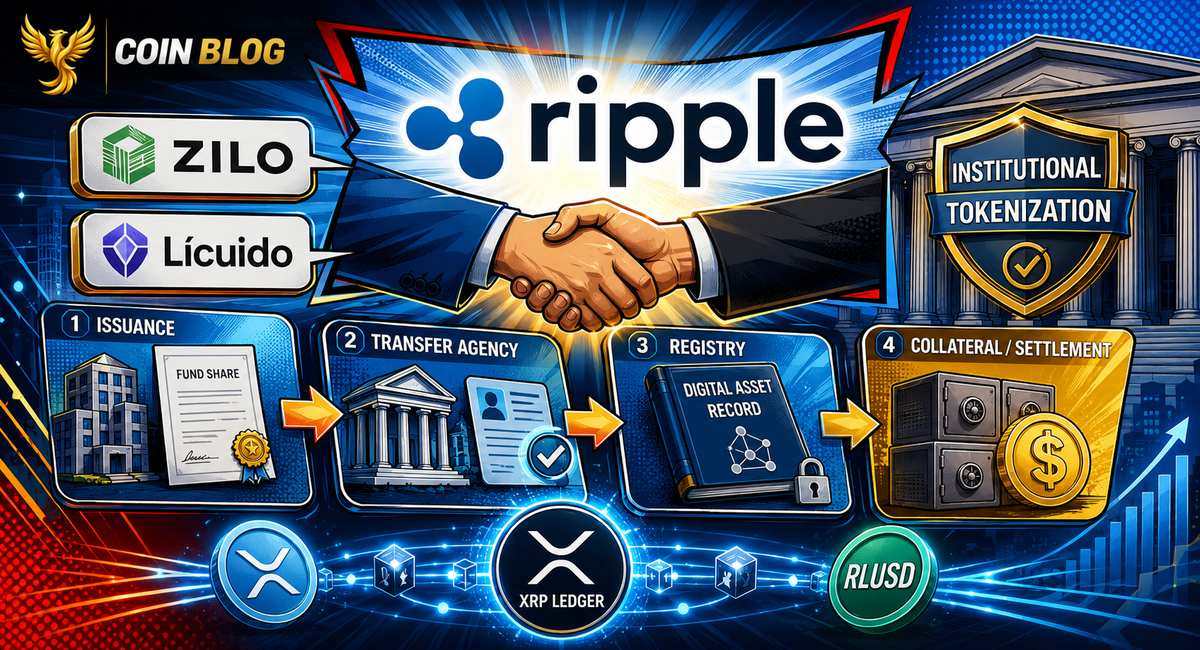
Ripple invested in two UK companies, ZILO and Licuido. ZILO provides transfer-agency and record-keeping technology for asset managers, while FCA-regulated Licuido handles issuance, distribution and utility for tokenized assets. Financial terms were not disclosed. Ripple wants to connect those functions with the XRP Ledger, custody, RLUSD and atomic settlement so fund shares can become usable collateral from the moment they are issued.
The announcement is less dramatic than a new token launch, but it addresses the main obstacle in institutional tokenization. A fund share cannot merely exist on a blockchain. The system must identify the legal owner, process subscriptions and redemptions, enforce restrictions, distribute income and let the asset enter a lending or collateral transaction without breaking the official register.
That is why Ripple is buying operational nodes rather than attention. If the transfer agent and liquidity platform operate within one workflow, an asset can move from issuance to collateral with fewer manual reconciliations. The trade-off is dependence on a controlled partner set and uncertainty over whether outside custodians and venues will recognize XRPL records.
The second-order effect concerns RLUSD. The stablecoin could become the cash leg of delivery-versus-payment transactions, generating demand from fund collateral rather than retail transfers. Watch the first participating funds, actual collateral usage, atomic settlement volume and interoperability with external systems. Tokenization succeeds not when an asset appears in a wallet, but when it can be legally transferred, pledged and redeemed without a manual bridge between the blockchain and the regulated shareholder register. That execution layer matters.