 Base
Base Unichain
 Robinhood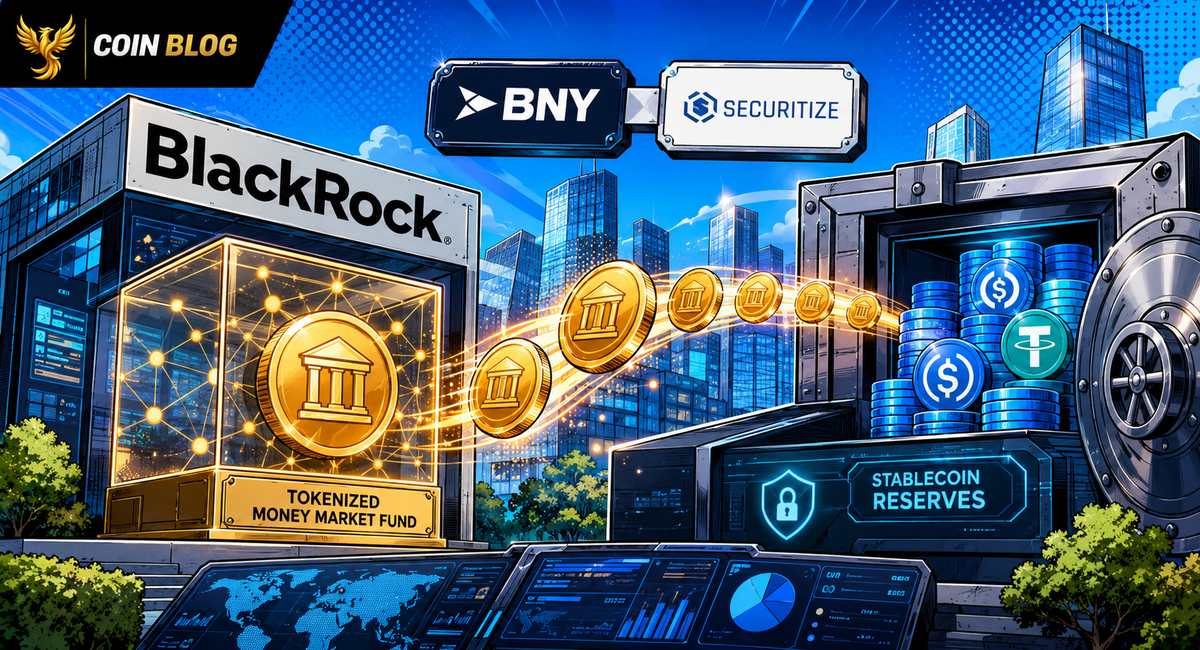
BlackRock introduced two tokenized money market products designed for institutional investors and payment stablecoin issuers. BSTBL is an onchain share class of an existing Treasury liquidity fund on Ethereum, with BNY acting as transfer agent and tokenization provider. BRSRV is a multichain fund that automatically reinvests daily dividends through Securitize. BlackRock says the structures are intended to qualify as eligible reserve assets under the GENIUS Act.
This changes the competition in real-world assets. Tokenized Treasury funds were previously marketed as more convenient fund shares for investors. These products are designed as internal components of another digital asset. A stablecoin issuer can hold reserves in tokenized fund shares, earn income, move collateral between approved wallets and automate reporting.
Programmability does not remove the legal layers. A stablecoin user depends on the issuer, fund, custodian, transfer agent, blockchain and redemption rules. If one layer closes overnight or restricts an address, the idea of a continuously available reserve becomes only partly true. The critical question is how quickly fund shares can become bank money during a large redemption wave.
The second-order effect will reach smaller issuers. Instead of building a complete reserve-management operation, they may buy a regulated BlackRock module. That can improve standardization while concentrating more infrastructure in a few asset managers and service providers. Watch the first customers, assets under management, supported chains and actual redemption times. The winning stablecoin may not be the one with the loudest brand. It may be the one whose reserve stack can be verified by regulators, banks and auditors with the least delay and operational ambiguity.